
YOU CAN’T ALWAYS BE BESIDE THEM. YOU CAN HELP THEM BE BETTER PREPARED.

Watching children become more independent is one of the joys—and challenges—of parenting. Walking home from school, visiting friends and joining new activities are important steps toward growing up. We want children to enjoy those experiences with curiosity and confidence. We also want them to recognize when something is wrong and know that they have permission to act.
C.O.B.R.A. Kids & Family Safety brings those conversations into practical, age-appropriate training. Children practice setting boundaries, using their voices, seeking help and responding to unsafe situations. Parents help reinforce those lessons beyond the classroom. The goal is to make safety something your family understands and practices together.SAFETY IS A FAMILY SKILL.
The objective is not to make children fearful. It is to make important safety concepts familiar, understandable and practiced.
FAMILY SAFETY STARTS AT YOUR OWN FRONT DOOR.

Home is where children should feel comfortable and protected. It is also where familiar routines can lead us to act without thinking: answering a knock, responding to someone who claims to be making a delivery, or assuming another family member has checked who is outside. A family safety plan gives everyone a shared understanding of how to handle those moments.
Children need clear, age-appropriate rules about answering doors, sharing information and getting an adult’s attention. Parents need to consider how those rules work when a babysitter, grandparent or older sibling is in charge. Use these conversations to build consistent habits that everyone caring for your child understands.
DOES EVERYONE IN YOUR FAMILY KNOW THE PLAN?
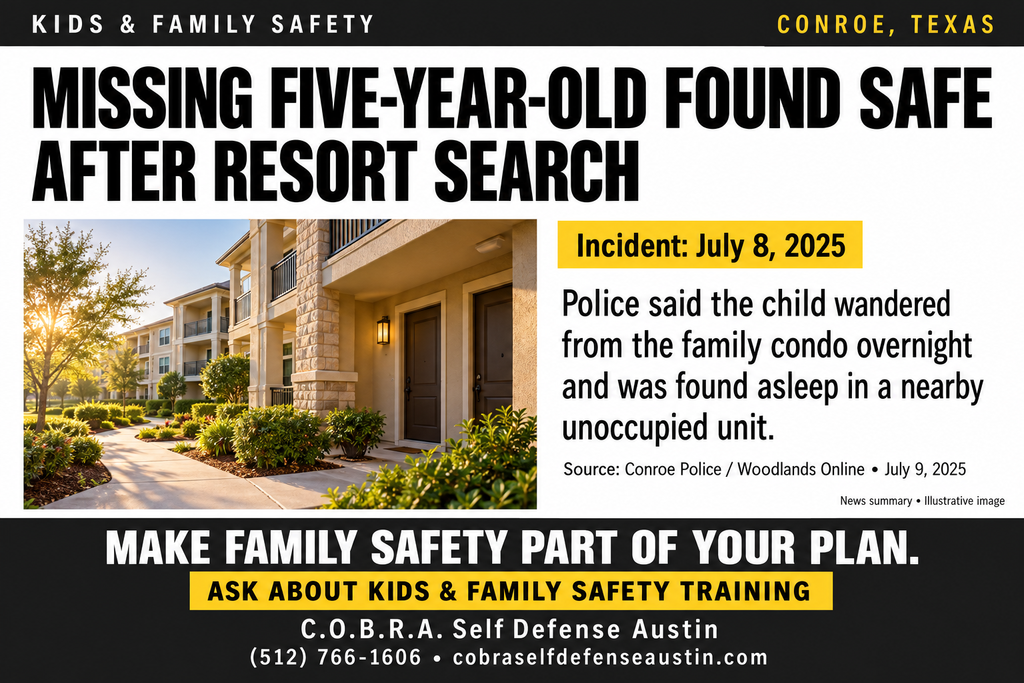
When something unexpected happens, families may have only moments to communicate. Would your child know how to reach you, contact emergency services or explain where they are? Have you discussed which nearby adults they can approach for help? A plan becomes more useful when children have practiced their part in it.
Family preparedness is an adult responsibility. Children should never be expected to confront an intruder or protect the household. Their preparation should focus on recognizing a problem, following appropriate instructions and seeking safety and help. C.O.B.R.A. Kids & Family Safety helps families make those essential conversations part of everyday life.
“DON’T TALK TO STRANGERS” ISN’T ENOUGH
Children interact with unfamiliar adults all the time. A better safety education teaches children to notice behavior that does not make sense: secrecy, isolation, boundary violations, unusual requests and attempts to move them away from safety.
ABDUCTION PREVENTION & ESCAPE

Behind every missing-child report is a family waiting for answers. In 2025, the FBI recorded 323,767 missing-person entries involving children under 18. These are reports—not necessarily different children—and include runaways, abductions and other circumstances. At the end of that year, 21,487 records for children under 18 remained active, including cases originating in earlier years. These figures are not an annual count of abductions, nor do they establish how many children will never be found. The FBI’s reporting does not provide a complete national annual child-abduction total, and an unresolved case can still end in recovery.
Recent Texas cases show why preparation matters. In Schertz in January 2025, police reported that a 10-year-old boy ran away unharmed after a man tried to lure him into a van. In Johnson City in June 2025, police investigated an incident involving two children: one escaped, while the other was taken to a gas station and safely recovered by the child’s father. In Keene in July 2026, investigators said a 15-year-old girl escaped after a man tried to force her into an SUV. These children reached safety; they are not examples of children who remain missing. Their experiences give families a reason to discuss boundaries, seeking help and responding to danger before an emergency occurs. Contact C.O.B.R.A. Self Defense Austin to ask about Kids & Family Safety training.
INTERNET SAFETY IS PERSONAL SAFETY
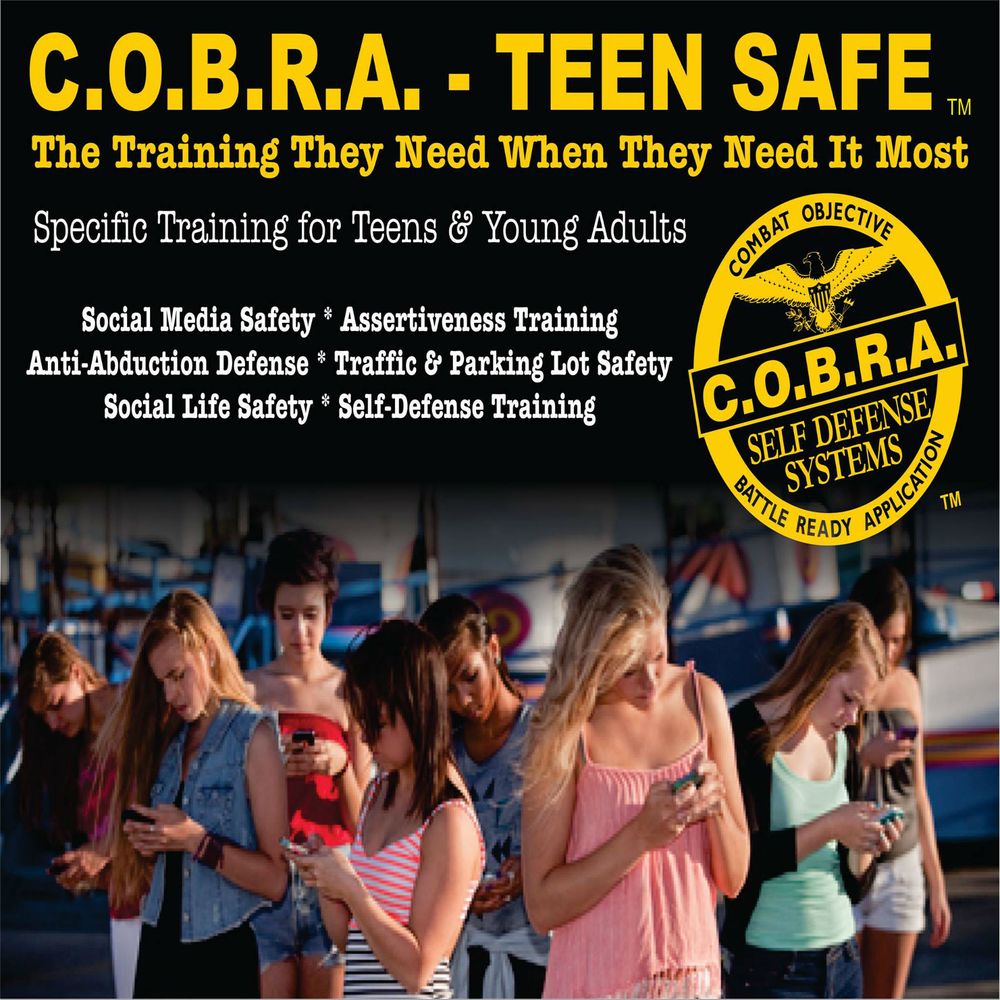
The internet is where teens build friendships, explore interests and find a sense of belonging. It is also a place where someone can hide their identity and intentions behind a convincing profile. A person posing as another teen may use compliments, shared interests or sympathy to earn trust, then push for private conversations, personal information, intimate photos or an in-person meeting. Pressure can come from classmates and dating partners, too. Warning signs include demands for secrecy, requests to move conversations to private channels, and threats to share embarrassing information or images. Teens need to understand that attention is not the same as trust—and that they can end an interaction even with someone they have come to care about.
Online safety involves more than avoiding strangers. Cyberbullying, account theft, scams and location sharing can affect a teen’s privacy, relationships and personal safety. Families can prepare by discussing boundaries, reviewing privacy settings together and making it clear that asking for help will not automatically result in blame or punishment. A teen who has shared something, clicked a suspicious link or trusted the wrong person needs support, not shame. Start the conversation before a problem becomes a crisis. Contact C.O.B.R.A. Self Defense Austin to ask about internet safety as part of our Kids & Family Safety training.requests should be reported to a trusted adult.
SAFETY SUPER KID™ — SMARTER. STRONGER. SAFER.

Every parent wants their child to be safe, but “be careful” doesn’t tell a child what to do when something feels wrong. Created by Ken Morgan, Safety Super Kid™ makes important safety lessons approachable through Scout, our friendly safety superhero, and colorful activities that invite children to participate. From bully response and anti-abduction awareness to internet safety and the buddy system, the program helps children practice speaking up, making safer choices, and seeking help from trusted adults.
Learning continues at home with the 32-page Safety Super Kid™ Family Safety Workbook and accompanying Parent Guide. Together, they give families a way to start meaningful conversations, work through everyday situations, and reinforce safety habits through shared activities. Explore the program to see how Scout can help your family turn “be careful” into “let’s practice what to do.”
THIS IS NOT KARATE FOR KIDS
Traditional martial arts can provide discipline, fitness and long-term development. This program has a different objective: practical personal safety without belt progression or years of attendance.