
Smarter. Stronger. Safer.

You can’t be beside your child every moment—but you can help them practice what to do when something doesn’t feel right. Safety Super Kid™ turns important safety lessons into engaging activities, meaningful conversations, and practical skills children can understand. From responding to bullying and recognizing unsafe requests to protecting personal information online, the program helps children learn to speak up, make safer choices, and get help.
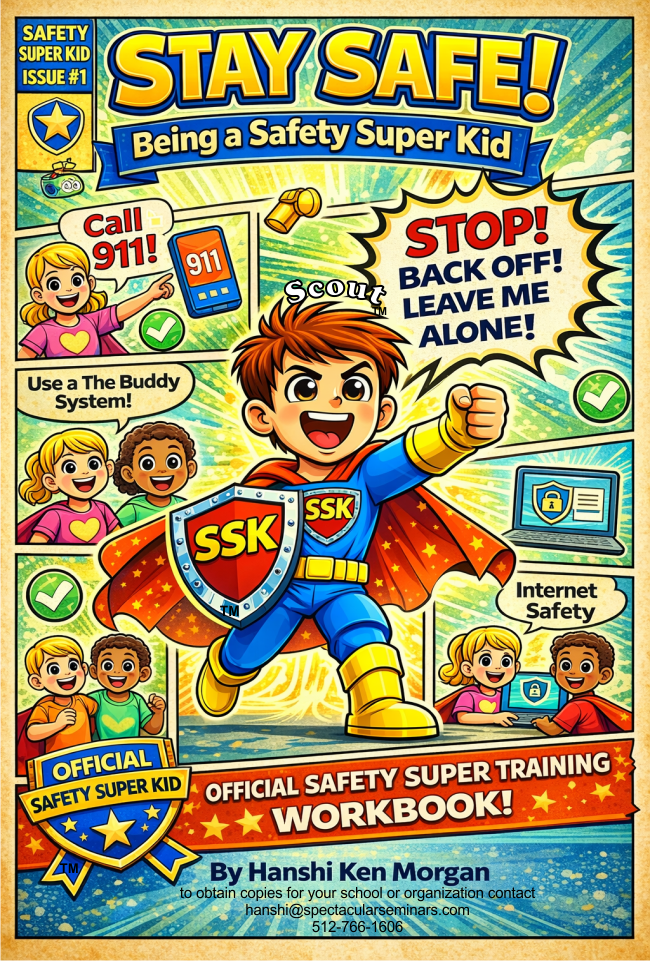
Created and taught by Ken Morgan, Safety Super Kid™ brings children and parents into the learning process together. Guided instruction, the 32-page Family Safety Workbook, includes a Parents Guide which connects the workshop lessons with everyday life. Our goal is to help children become better prepared while giving families practical ways to keep safety conversations going at home.
MORE THAN “BE CAREFUL”
“Be careful.” “Stay safe.” “Tell someone.” We say these things because we love our children—but children need help understanding what those words mean in an actual situation. What could they say when another child won’t leave them alone? What should they do if someone asks them to go somewhere without a parent’s permission? Who can they turn to when an online conversation becomes uncomfortable? Safety Super Kid™ gives families a way to explore those questions before a child faces them alone.
Through age-appropriate discussion, activities, and guided practice, children learn to recognize concerning behavior, use their voices, move toward safety, and seek help from trusted adults. We encourage questions and help children understand that they can tell a parent or trusted adult about something troubling—even if they feel embarrassed or have broken a rule. Children can learn useful safety skills; the responsibility for protecting them remains with adults.
SAFETY SKILLS FOR EVERYDAY LIFE
Safety Super Kid™ gives children practical lessons they can discuss with their parents and practice together. Key topics include:
- Bully Response: Recognizing bullying, setting verbal boundaries, and asking trusted adults for help.
- Anti-Abduction Awareness: Checking with a parent or guardian before going anywhere with someone—even someone familiar—and responding to unsafe requests.
- Internet Safety: Protecting personal information and telling a trusted adult about uncomfortable messages, requests, or online behavior.
- Personal Boundaries: Speaking up about unwanted contact and understanding that uncomfortable situations deserve an adult’s attention.
- The Buddy System: Staying together, following family check-in rules, and knowing what to do if separated.
- Getting Help: Identifying trusted adults, practicing how to explain a problem, and learning when and how to call 911.
TAKE A LOOK INSIDE
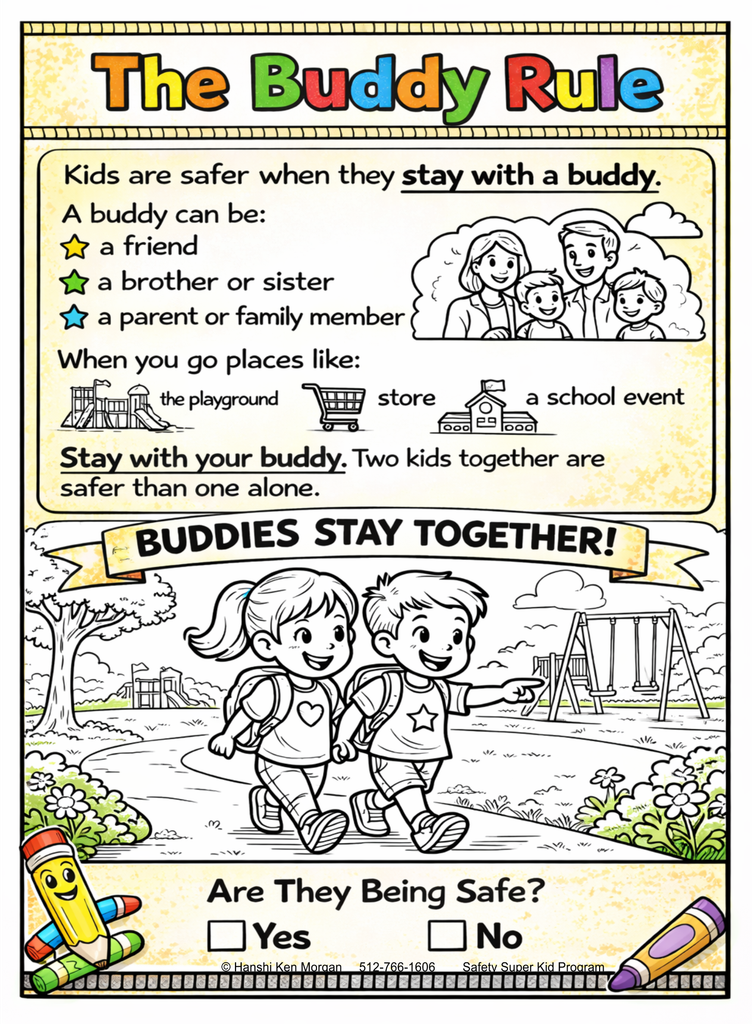
Open the 32-page Safety Super Kid™ Family Safety Workbook and meet Scout, the friendly superhero who helps bring safety lessons to life. Colorful illustrations, activities, coloring pages, and safety missions give children opportunities to think through everyday situations. Each activity provides a starting point for asking questions, discussing choices, and practicing what to do.
Work through the pages together and let your child explain their answers. Who would they ask for help? What could they say if someone ignored their boundaries? What should they do if they became separated from you? These conversations help parents discover what their child understands and where they need more guidance—making the workbook something families can return to as children grow.
WHAT HAPPENS IN A WORKSHOP?

Children learn by participating. In a Safety Super Kid™ workshop, Ken Morgan leads discussions, activities, and guided practice that connect safety lessons to situations children recognize. Participants practice speaking up, setting boundaries, identifying trusted adults, and thinking through how to get help. Questions are encouraged, and instruction is adapted to the ages and needs of the group.
The emphasis is on practical choices: noticing when something feels wrong, creating distance from an unsafe situation, and reaching an adult who can help. Children have opportunities to rehearse their words and responses in a supportive setting. Workbook activities and the Parent Guide give families ways to revisit those lessons afterward, helping turn a workshop experience into ongoing safety conversations at home.
PARENTS ARE PART OF THE PROGRAM

Your child’s questions don’t end when the workshop does. The Safety Super Kid™ Parent Guide helps you continue the conversation at home, reinforce workbook lessons, and connect them to your family’s routines. Walking to a friend’s house, using a tablet, attending an activity, or visiting a crowded store can all become opportunities to discuss safer choices without making safety a frightening subject.
Practice together: identify trusted adults, agree on check-in rules, and talk through what your child could do if separated from you. Let your child rehearse asking for help, and make it clear that they can tell you about something uncomfortable—even if they made a mistake. You don’t need to cover everything in one conversation. Short, repeated discussions give children opportunities to ask questions and help you understand where they need support.
Meet the Instructor

Ken Morgan began his martial arts training in 1967 and holds the rank of ninth-degree black belt in Okinawan Shorin Ryu. A certified C.O.B.R.A. Self Defense instructor and multiple martial arts Hall of Fame honoree, Ken brings decades of teaching experience to his work with children and families.
During his years as a Texas-licensed childcare director and owner of a major childcare facility in Pflugerville Texas, Ken worked directly with school systems, children, parents, and staff on the everyday challenges of keeping children safe. That experience helped shape the Safety Super Kid™ program, connecting practical self-defense knowledge with an understanding of children’s needs and abilities as well as the concerns families face.
Ken developed Safety Super Kid™ to address real-world issues through lessons children can understand and practice. His approach combines clear explanations, engaging activities, and family participation to help children recognize concerning situations, speak up, and seek help—while giving parents tools to reinforce those lessons at home.